Product strategy for critical user flows at 100M+ scale navigating extreme corner cases
Product Strategy | Technical Constraints | Scale
Context
The voting system for BBB24 was redesigned as a direct response to issues observed in the previous season (BBB23), where outcomes were heavily influenced by organized fan bases operating large-scale voting campaigns. The traditional model allowed unlimited votes per user, favoring contestants with highly mobilized fandoms over those who contributed more consistently to the show’s entertainment value. To rebalance influence and increase fairness, a mixed voting system was introduced, combining a single authenticated vote per user (50%) with fan votes (50%). This approach aimed to reduce the impact of mass voting, limit automated abuse, and give broader audiences a meaningful voice. The voting flow was further structured into phases, first to save and later to eliminate, encouraging earlier removal of low-engagement participants and reinforcing engagement from the general public throughout the season.
Challenge
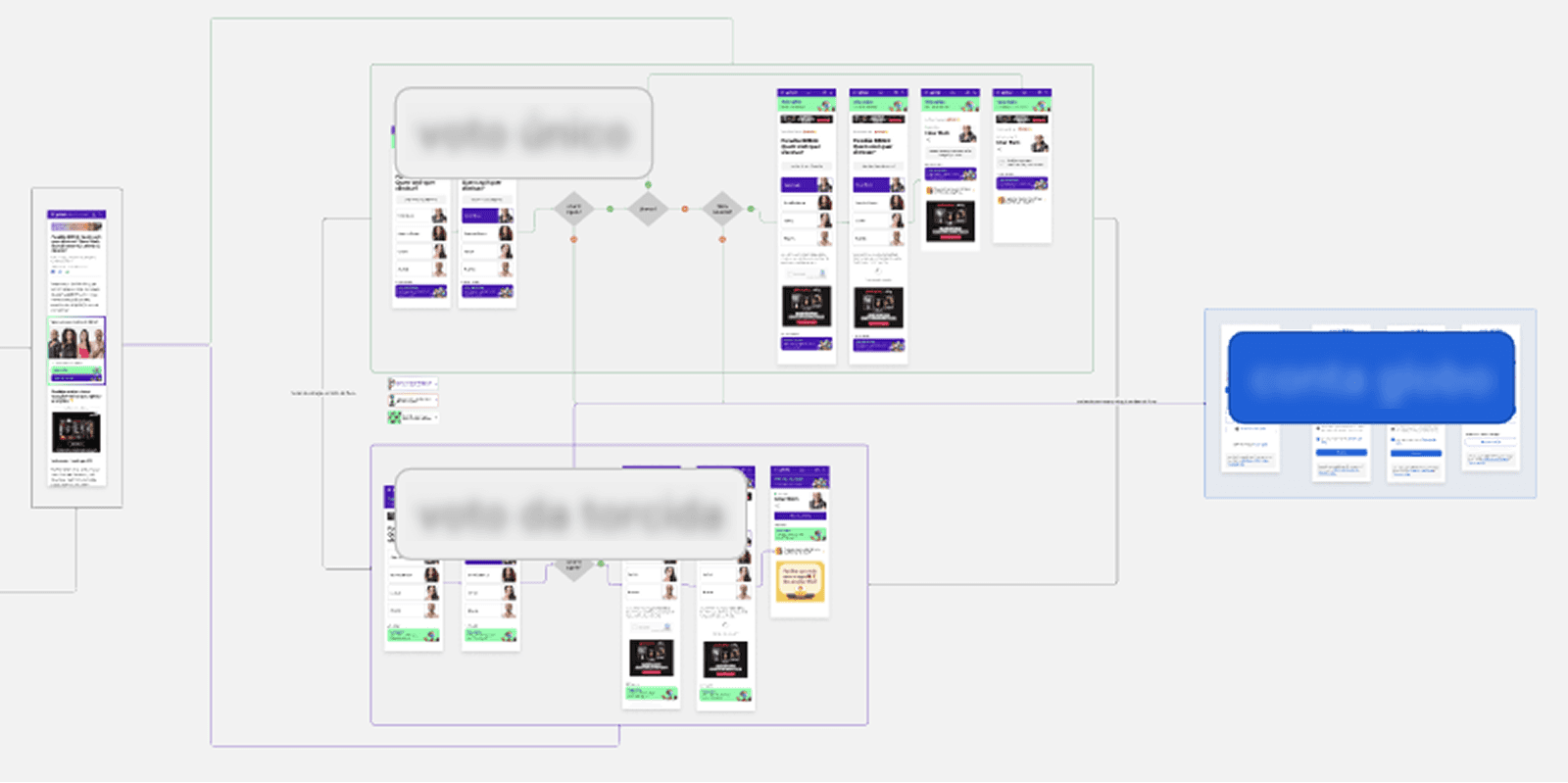
The new voting model introduced significant product complexity. Two distinct voting types needed to coexist, each accessed through separate URLs, while being presented with equal weight and neutrality to avoid favoring either mechanism. The experience had to remain highly familiar, minimizing disruption to the existing user journey despite the added complexity. Users could enter the flow from multiple entry points, including social media, streaming platforms, and live TV, requiring a resilient and consistent experience across contexts. The entire system needed to be fully QR-code friendly, supporting fast, low-friction access at scale. All of this had to be designed, tested, refined, and launched within a four-month timeline, while also accommodating advertising placements in an environment with exceptionally high traffic and visibility.
Technical constraints
The end-to-end voting experience spanned four different teams, each with its own priorities, roadmaps, and technical ownership. Development and design teams were not previously integrated, requiring alignment across unfamiliar workflows and decision-making processes. Beyond the user-facing experience, the system also needed to support editorial teams responsible for configuring and managing voting setups, adding operational complexity. Extensive documentation was required to enable onboarding and training for a large temporary workforce of over 100 people dedicated exclusively to the season. Additionally, the product handled sensitive personal data (CPF), demanding close collaboration with legal, compliance, and anti-fraud teams. The solution had to anticipate and safely handle extreme edge cases, including CPF validation failures, duplicate voting attempts, system abuse, and potential data security threats.
Process
The project required an intensive, highly collaborative process over four months. Representatives from four different teams met daily to align decisions, dependencies, and delivery timelines. We conducted desk research, user research, and multiple debriefing sessions to validate assumptions and refine the solution. The team worked through iterative prototyping cycles, continuous technical feasibility checks, and cross-functional workshops with UX writers to design error states and sensitive data flows. In parallel, we interviewed editors and operational stakeholders responsible for configuring and managing the voting system. In total, the initiative involved more than 2,500 hours of cross-functional work, reflecting the scale, complexity, and delivery pressure of the project.
Solution approach
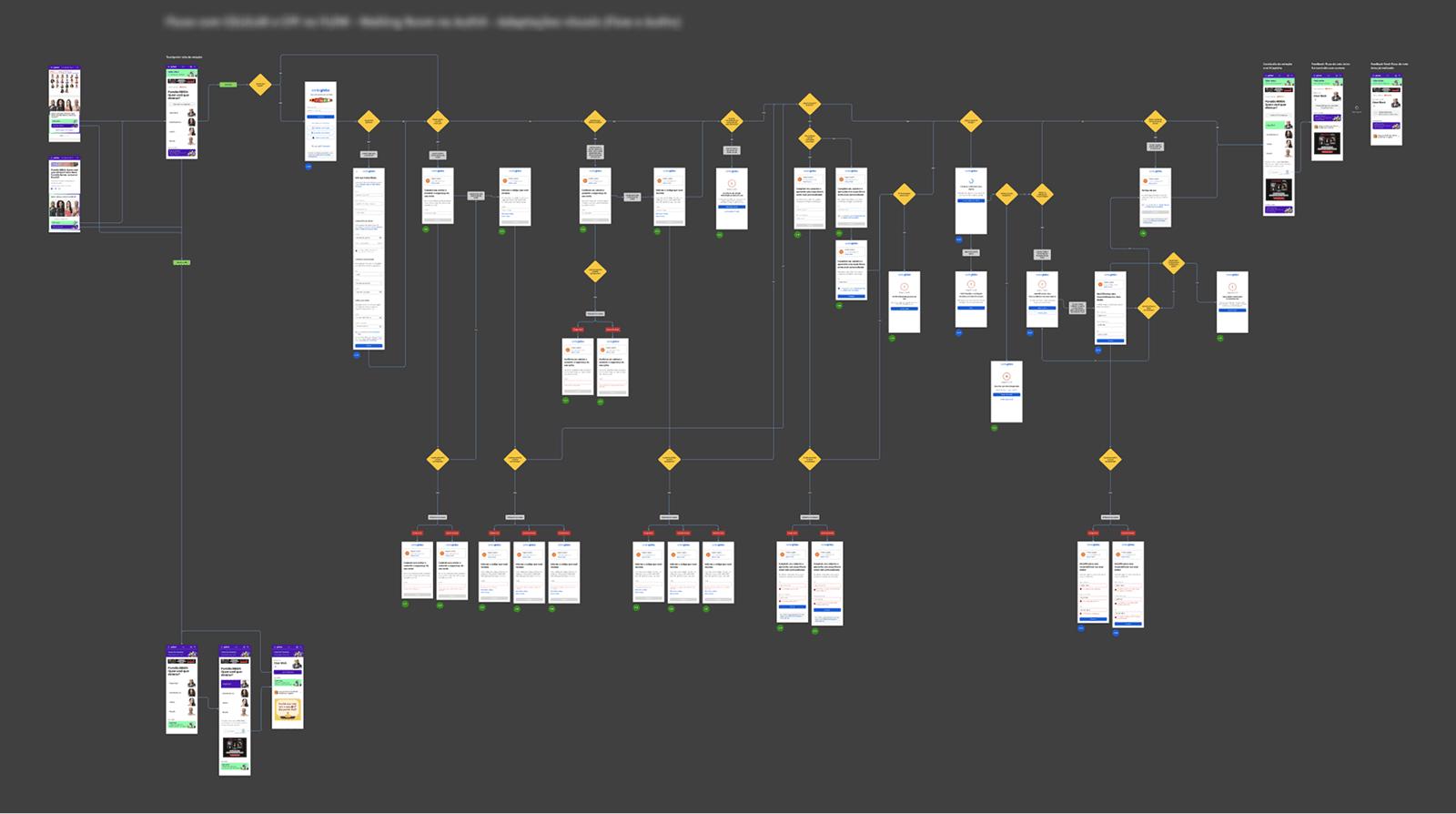
After mapping all user flows, entry points, and sensitive moments across the voting journey, we defined a set of hypotheses to be tested and validated.
Entry Point Hypothesis 1
All internal and external touchpoints would redirect users to a single landing page presenting both voting options with equal prominence. This page would provide clear context about the new voting model and guide users to either modality without bias.
Entry Point Hypothesis 2
A single reusable component, internally referred to as the “super component,” would be distributed across multiple surfaces. This component would expose both voting CTAs consistently, while also offering a support link redirecting users to an explanatory article detailing how the new voting system worked.
Recirculation Hypothesis
Each voting modality would have its own visual identity and dedicated flow, with intentional recirculation between them. After completing one vote, users would be guided to the other modality, ensuring exposure to both options while maintaining balance.
Non-negotiable Requirements
All solutions were required to present both voting options with equal weight. Participant photos needed to be visible across all flows to preserve recognition and clarity. In the single-vote (CPF-based) flow, the system had to clearly indicate when a user had already voted, along with a visible support CTA to handle edge cases such as duplication, validation errors, or suspected fraud.
Research
Designers prototyped all hypothesis-driven flows and prepared them for user testing. A specialized research agency handled user recruitment and anonymization, contacting participants to ensure compliance and data integrity. We conducted three days of moderated user research with the support of a dedicated research team. Sessions were observed in real time from a mirror room, where insights were documented using a structured discussion guide.
After the initial research phase, we held a comprehensive debrief to synthesize findings and identify patterns across sessions. Based on the qualitative insights, we determined that an additional validation round was necessary to further test and refine the hypotheses. The prototypes were iterated accordingly, followed by two additional days of user research to confirm decisions and reduce risk before implementation.
Implementation
After the second research round, two of the three hypotheses were validated. We moved forward with the implementation of the “super component,” featuring clear and neutral CTAs for both voting modalities, along with a dedicated support link. The recirculation strategy between voting flows was also implemented to ensure balanced exposure across both options.
Engineers from three different teams were allocated at full capacity to deliver the solution, coordinating closely to integrate the component across multiple surfaces while maintaining consistency, performance, and reliability at scale.
Operational training
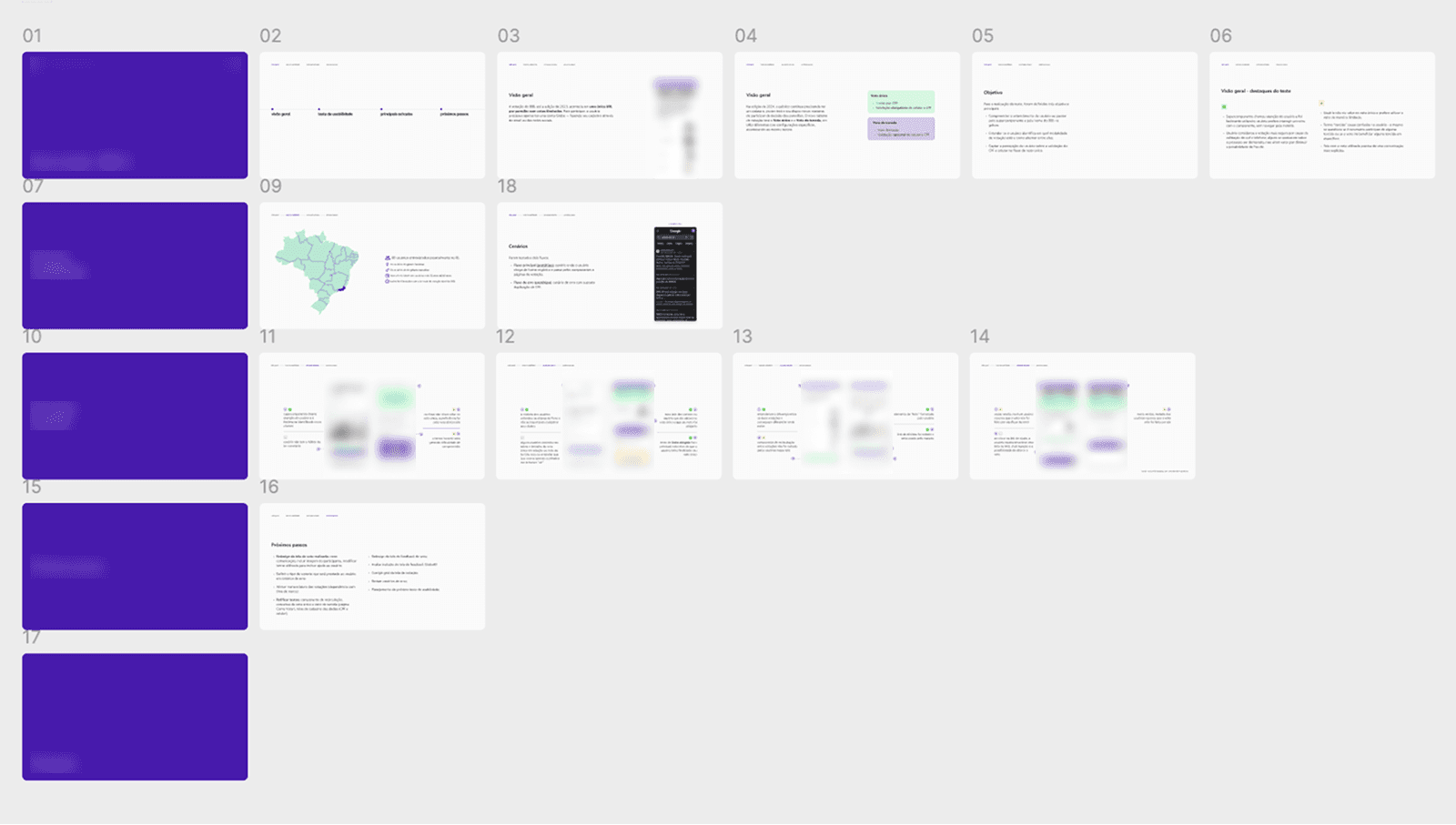
In parallel with implementation, the entire change process including configuration, content setup, and new functionalities was thoroughly documented. I led a training and walkthrough session with the operational team to ensure a clear understanding of the new voting system, workflows, and edge cases, enabling the team to confidently manage and operate the experience during the season.
The new voting system successfully went live and was widely adopted by the audience. Users actively engaged with the experience, discussed the changes across social media, and used both voting modalities at scale. The platform reached a record of over 200 million votes in a single day, validating the robustness of the solution under extreme traffic conditions. During the first live vote, I closely monitored the experience alongside the team, identifying potential bugs or friction points and enabling immediate adjustments to ensure stability and continuity.
In addition, we delivered two new advertising placements integrated into the voting flow. Following strong visibility and high CTR performance, both placements were later adopted as standard formats across the platform, generating lasting business impact beyond the BBB season.
My role was featured by Globo's UX leadership here.
Strategic Differentiators
Fairness at scale is not only a business challenge but a systems and governance problem. Balancing two competing voting mechanisms required neutrality by design, clear mental models, and strong recirculation logic to avoid bias. User trust increased when constraints were explicit, especially in single authenticated voting flows. Cross-team alignment and exhaustive documentation were as critical to success as interface decisions, enabling fast decision-making under extreme traffic and tight timelines. Finally, treating high-visibility moments as product surfaces unlocked both engagement and sustainable business value, proving that experience quality and monetization can scale together when intentionally aligned.
These achievements reflect collaborative work with talented teams across dev, design, editorial, and research.