Building personalization logic that works for algorithms and user behavior
User needs | Information Architecture | Machine Learning
Context
The platform operated at scale with dozens of content categories competing for limited editorial capacity and algorithmic attention. As content volume grew, the existing category-based structure struggled to balance personalization, operational constraints, and business goals. This created fragmentation in the user experience, inconsistent engagement across categories, and inefficiencies in content distribution, highlighting the need for a more scalable and user-centered content architecture.
Challenge
Built a personalized feed at scale from the ground up, balancing recommendation algorithms (ML constraints), user behavior insights, content operations, and business KPIs such as increased video consumption and authenticated users.
The core challenge was consolidating dozens of content categories into sections compatible with algorithm logic, user mental models, and content availability.
Product goals
Deliver content through a clear and fluid information flow
Adapt content ranking based on user engagement signals
Surface urgent content with priority
Constraints
Content prioritization could not be applied uniformly across all categories
Engagement levels varied significantly, with distinct user profiles per category
Prevented content duplication across surfaces and sections
Solution Approach
To address the challenges of limited content capacity and uneven category performance, we structured the solution into a three-phase rollout, allowing us to reduce risk, validate assumptions, and scale progressively:
Discovery
We conducted qualitative and quantitative user research to identify core user profiles and behavioral patterns across the platform. This phase focused on understanding how different audiences consumed content, including key attributes such as demographics, engagement drivers, and content preferences. These insights helped reveal clear differences in user intent and expectations between categories.
Reorganization
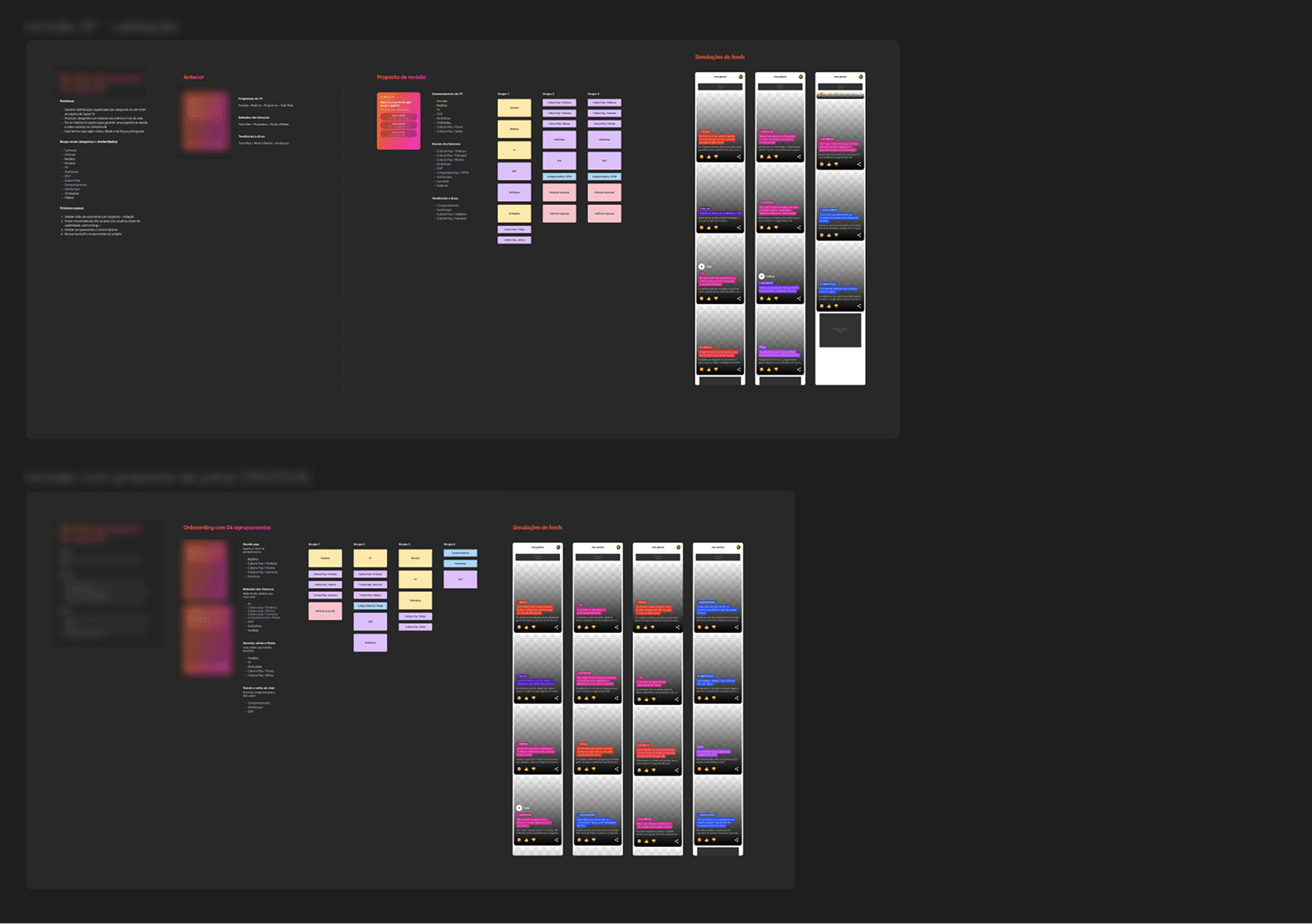
Using the research findings, we restructured the entire content taxonomy. Existing categories were reorganized into a new architecture composed of four strategic content groups, each designed to serve a distinct user profile and consumption pattern. For each group, we defined dedicated algorithmic routes to ensure content relevance, reduce duplication, and better align recommendations with user behavior. All structural decisions were grounded in research data and engagement metrics.
Delivery
Based on continuous observation and data validation, we rolled out the new category structure and content groups incrementally. This phase focused on monitoring performance, validating algorithm behavior, and ensuring editorial operations could sustain the new model. The result was a more scalable, coherent content offering aligned with user needs, algorithm logic, and operational capacity.
Before
Content was organized under a fragmented category structure, making it difficult for algorithms to consistently rank content and for users to find relevant items. Engagement varied significantly across categories, content capacity was stretched, and duplication across the platform diluted user experience and performance.
After
The new content architecture introduced clear category groups aligned with distinct user profiles and dedicated algorithmic routes. Content relevance improved, duplication was reduced, and editorial capacity was better distributed across groups.
Measured Impact
Within six weeks of rollout, overall content consumption increased, and users within each defined profile showed a 48% increase in engagement, validating the new structure across both user experience and system performance.
Key insights
User engagement was not evenly distributed across content categories, but driven by distinct user profiles with different consumption patterns and expectations. Treating all categories with the same prioritization diluted both algorithm performance and editorial capacity. By aligning content taxonomy, recommendation logic, and operational constraints around user profiles rather than categories, we unlocked clearer relevance signals, reduced duplication, and created a scalable structure that improved engagement and content consumption.
These achievements reflect collaborative work with talented teams across dev, design, editorial, and research.